


UnBarks it: Luck of the North
Deconstructing the comics genius of Carl Barks

I’m still happily reading up on my collection of Donald Duck albums featuring the work of Disney’s ‘Duck Man’ Carl Barks; discovering how much it has influenced my own cartooning and trying to analyze what it is exactly that makes Barks’ graphic storytelling so compelling.
This time I read ‘Luck of the North’, a story originally published in 1949:
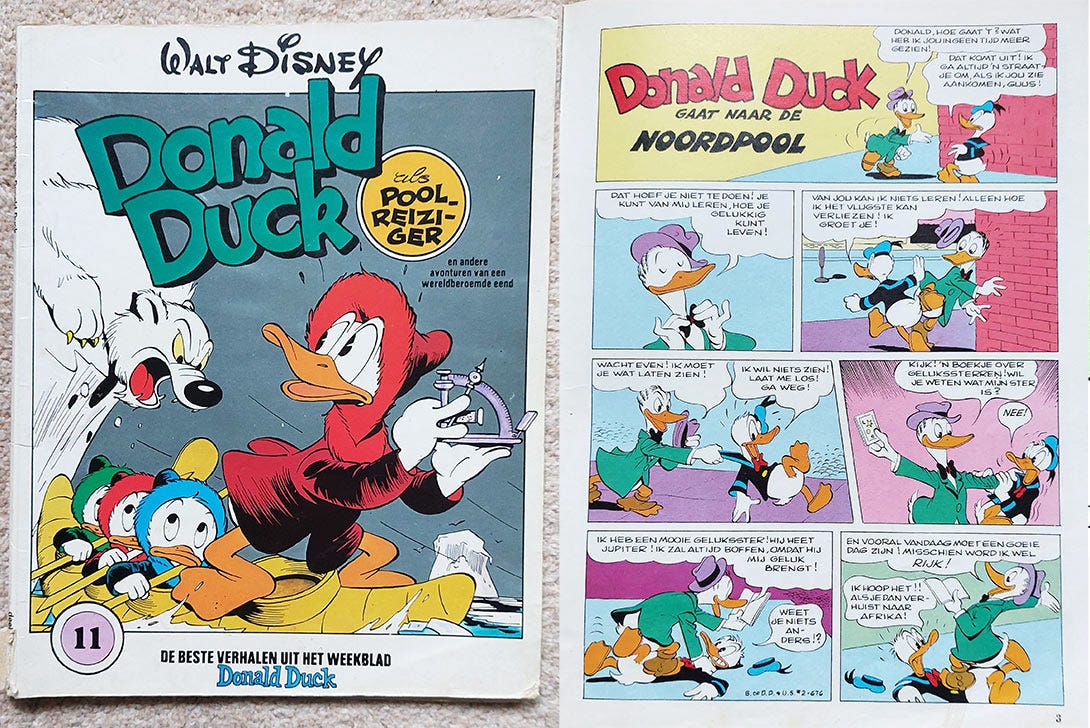
Donald’s annoying cousin Gladstone Gander was a relatively new addition, created just a few years before, and Barks introduces him brilliantly on the first page:
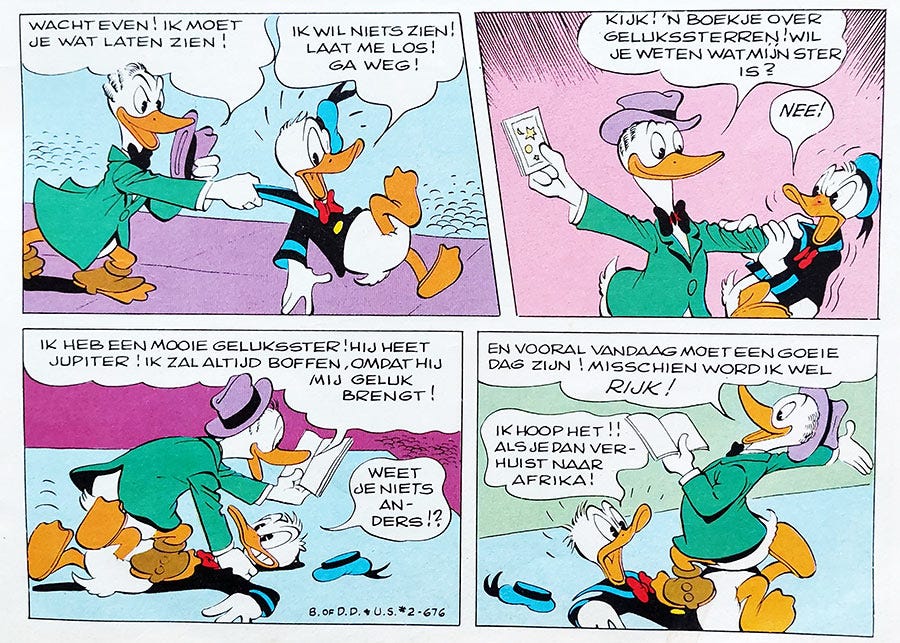
To uncover the graphic choices that Barks made here, I “translated” this scene to this:
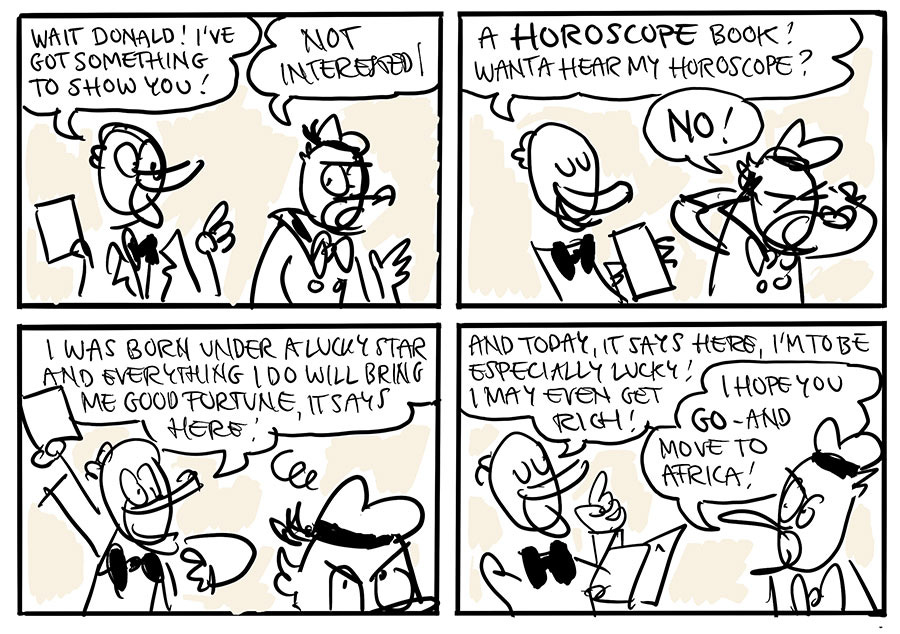
This is not necessarily a “bad” way of storytelling. But I can see I am availing myself of a few “easy” comics clichés that Barks has avoided:
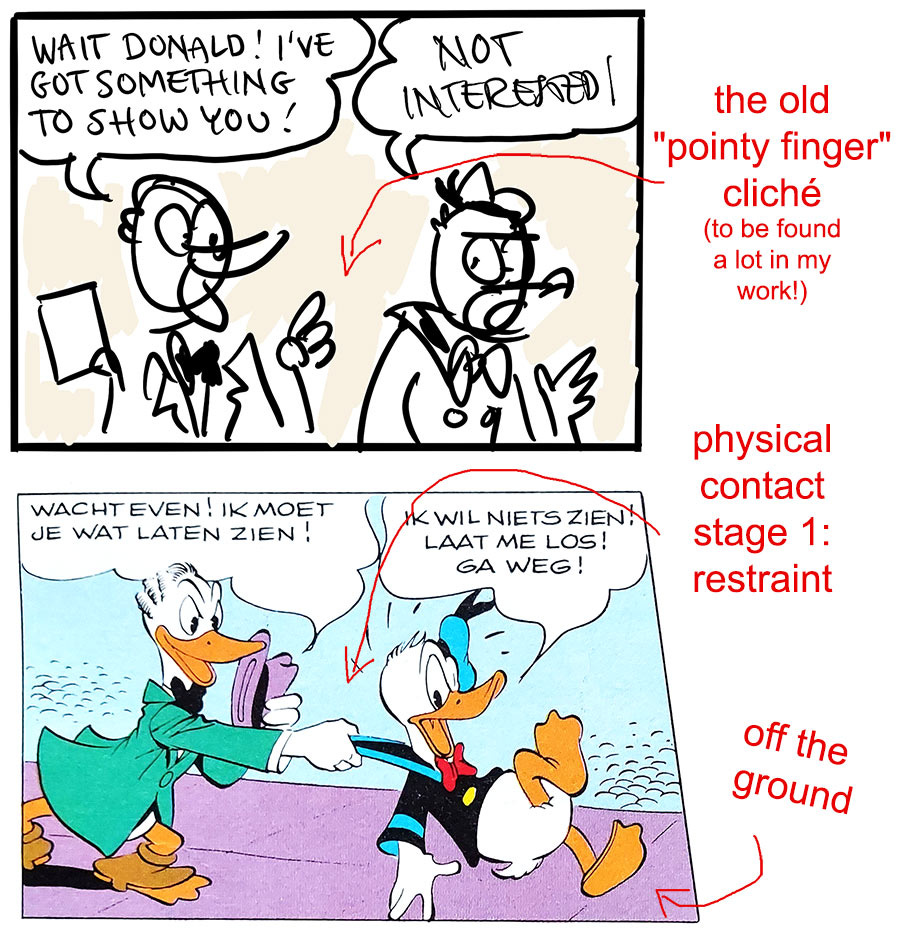
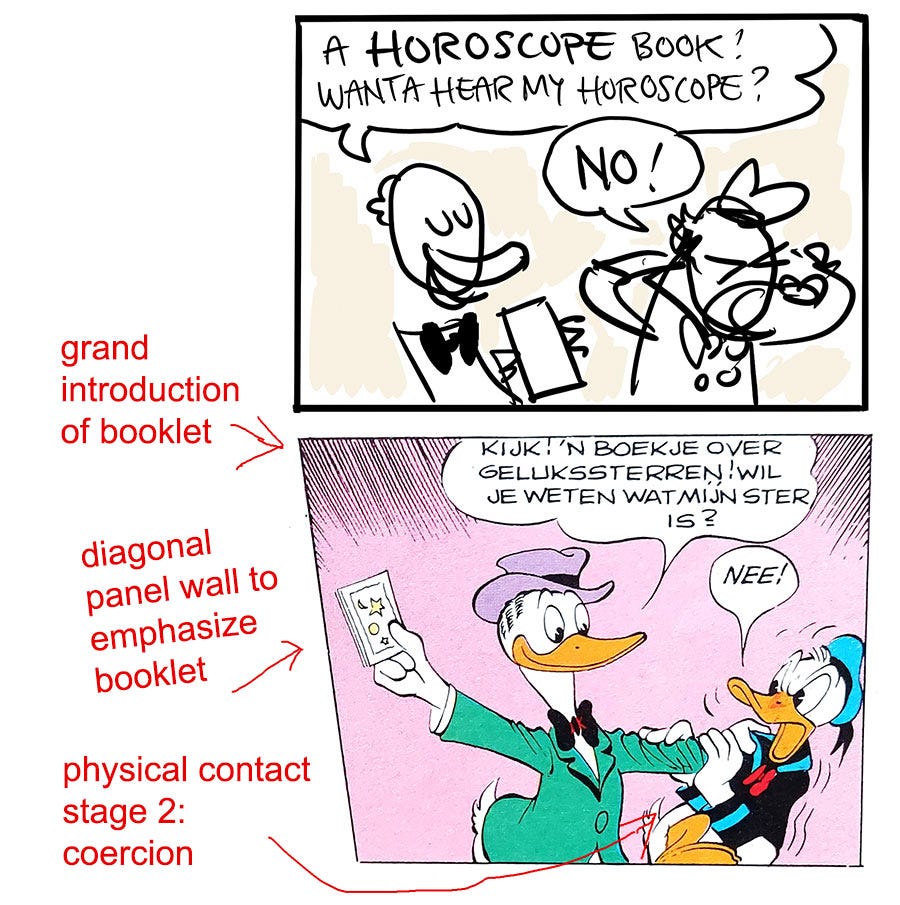
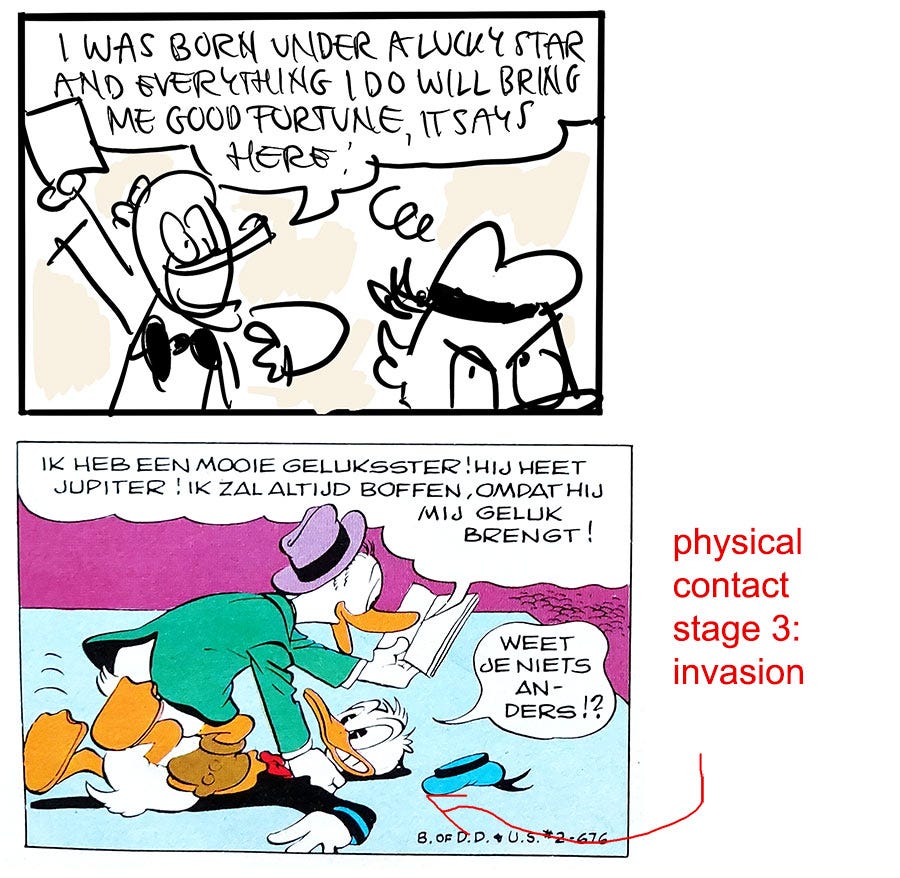
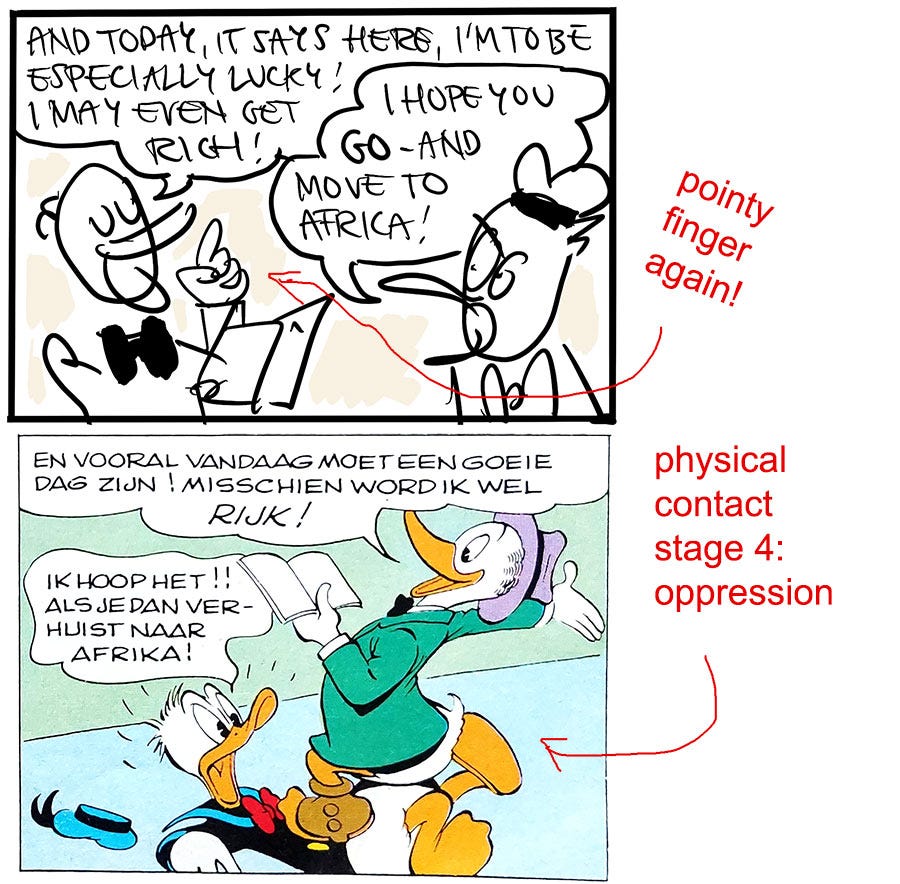
My comics style can feature a lot of “talking heads” (which I justify by putting an effort into the expressions). Barks steers away from this by drawing intensifying physical action, even into a simple conversation. I love how increasingly over-the-top Gladstone’s behavior gets in every panel. It’s a nice set-up for the rest of the story, where Donald sends him on a fake errand to the North Pole… and then relents. Which is depicted in this gem of a page:
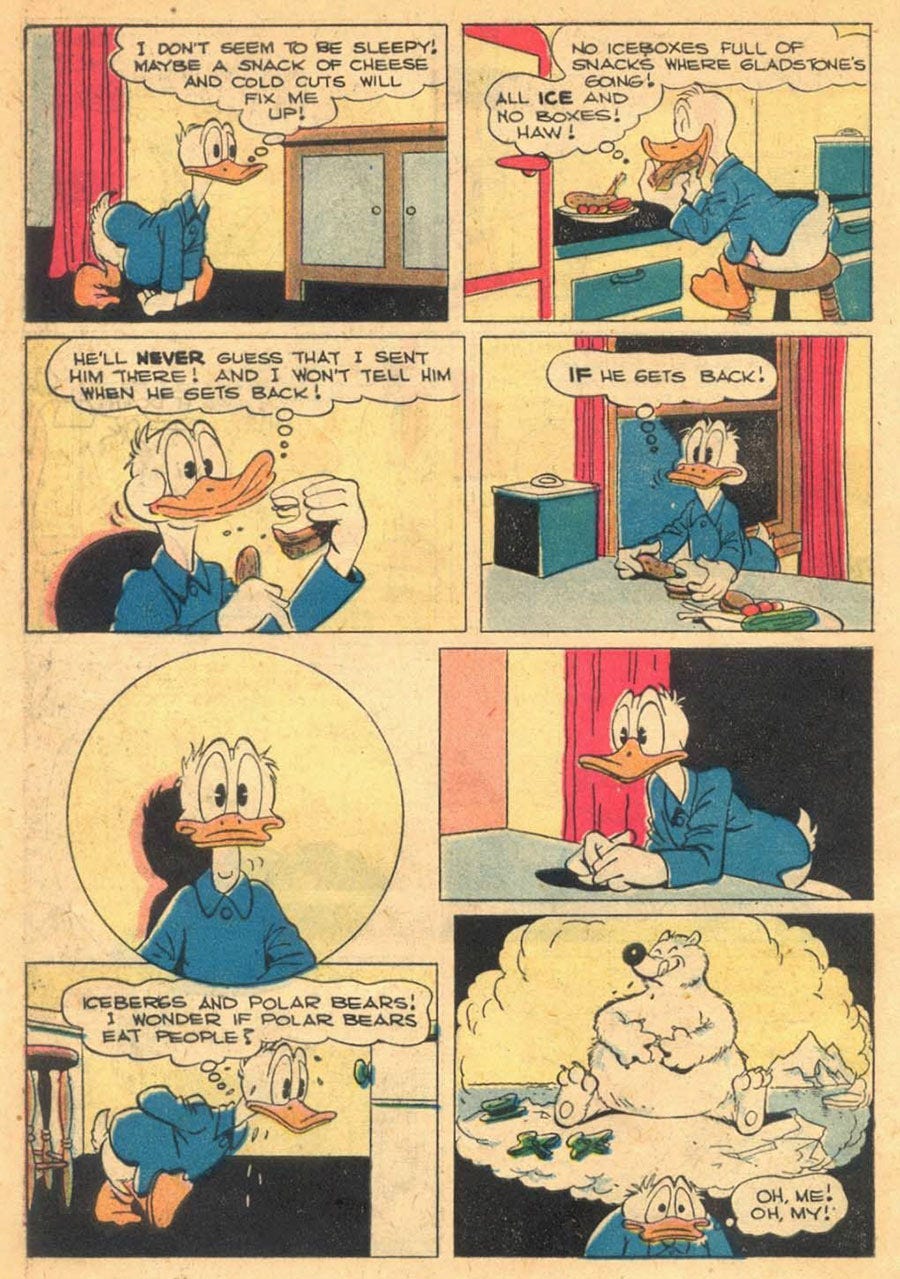
How brilliant are those silent panels on row three? The story could have done without them, but they add such a wonderful mood, and a bit of a moral, too. Look at the way Donald is looking directly at the reader as remorse sets in!
Since an early age, I have filled my head with Barks’ comics language. Even now that I am consciously analyzing it, his influence comes through unconsciously, like in the last comic I made:
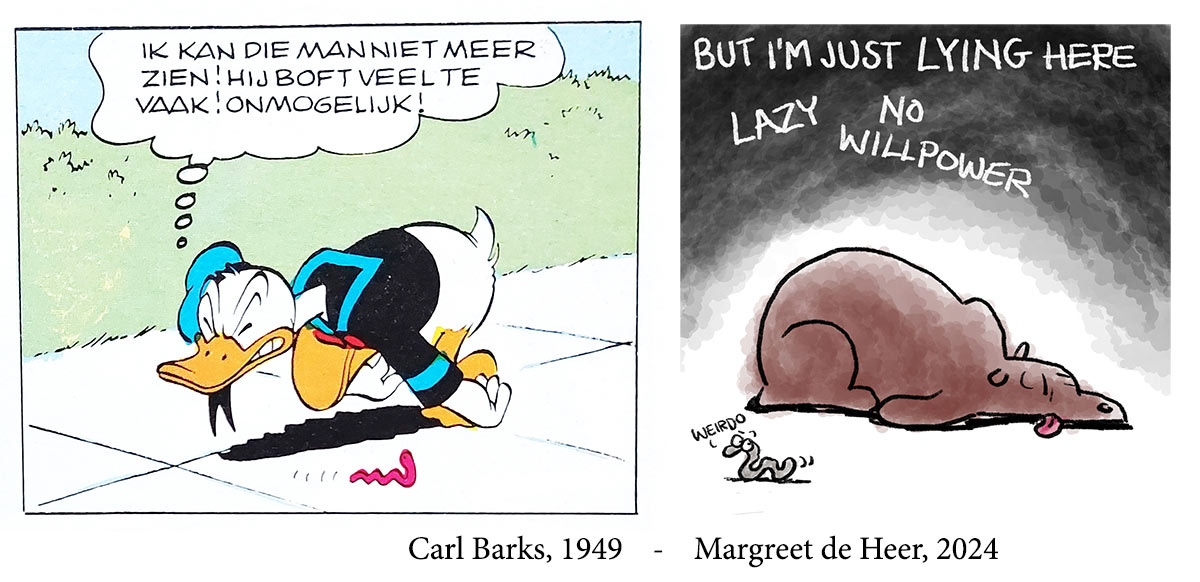
I almost literally copied Barks, including the worm! And I didn’t even realize it until I took a closer look at this story!
If you liked this post, take a look at my other UnBarksings:
Barksian balloons

When I was young I devoured the work of 'Duck Man' Carl Barks - you know, the artist who invented Disney’s Donald Duck universe, with Duckburg and all its inhabitants. In The Netherlands, Barks’ comics were collected in an album series and released at a rate of about four times a year, so my brothers and I amassed a collection of them that's still in ou…
UnBarks it

I got a lot of response on my recent post about ‘Duck Man’ Carl Barks - this Disney artist is obviously an inspiration to many others too - so I’m happy to pursue my research into what EXACTLY it is that makes his Duck-stories so timelessly brilliant…
I felt like a student in your Comics 101 class at Substack University. 😁 I learned so much and will reread it to take it all in. So good! I just love your work.
Breng dit uit in een boek(je). Je zal de nodige haters krijgen, maar ik vind je visie en opinie positief en vermakkelijk, ook in positieve zin.